
Breathing (Lung Function) Test
Pulmonary Function Test (PFT)
This test measures how well your lungs work. This includes how well you’re able to breathe and the effectiveness of your lungs to bring oxygen to the rest of your body. This test can normally be performed on kids ages 5 and up.
In particular, spirometry or lung function tests measure two key parameters: forced expiratory volume in one second (FEV1) and forced vital capacity (FVC). FEV1 measures the amount of air you can forcefully exhale in one second, while FVC measures the total amount of air you can exhale forcefully.
In people with asthma, this type of test can help evaluate the severity of their condition and monitor how well their treatment is working. If you have asthma, your healthcare provider may perform spirometry tests on a regular basis to assess your lung function and determine whether adjustments to your treatment plan are needed.
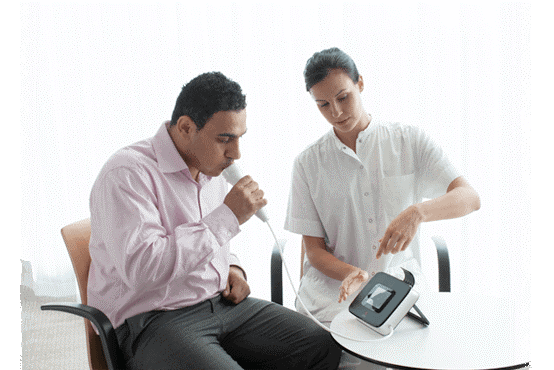
During a spirometry test, we will ask you to breathe in as deeply as possible and then exhale as forcefully and completely as you can into a mouthpiece attached to a spirometer. The test is non-invasive and usually takes only a few minutes to complete.
Often, we will perform the test twice; once before the administration of a medication called albuterol, and then again afterwards to determine lung function improvement. This test can help us diagnose asthma or other types of lung disorders.
Fractional Exhaled Nitric Oxide Testing (FeNO)
This test measures how well your lungs work. This includes how well you’re able to breathe and the effectiveness of your lungs to bring oxygen to the rest of your body. This test can normally be performed on kids ages 5 and up.
In particular, spirometry or lung function tests measure two key parameters: forced expiratory volume in one second (FEV1) and forced vital capacity (FVC). FEV1 measures the amount of air you can forcefully exhale in one second, while FVC measures the total amount of air you can exhale forcefully.
In people with asthma, this type of test can help evaluate the severity of their condition and monitor how well their treatment is working. If you have asthma, your healthcare provider may perform spirometry tests on a regular basis to assess your lung function and determine whether adjustments to your treatment plan are needed.
During a spirometry test, we will ask you to breathe in as deeply as possible and then exhale as forcefully and completely as you can into a mouthpiece attached to a spirometer. The test is non-invasive and usually takes only a few minutes to complete.
Often, we will perform the test twice; once before the administration of a medication called albuterol, and then again afterwards to determine lung function improvement. This test can help us diagnose asthma or other types of lung disorders.
FAQ’s
-
An allergy breath test may be recommended by a healthcare provider if you are experiencing symptoms such as wheezing, coughing, shortness of breath, or chest tightness that suggest you may have an allergy-related respiratory condition, such as asthma or allergic rhinitis.
Other reasons why a healthcare provider may recommend an allergy breath test include:
You have a family history of allergies or respiratory conditions.
You have a history of allergies to certain substances, such as pollen, pet dander, or dust mites.
You have a history of respiratory infections that have not responded well to treatment.
You have a history of occupational exposure to substances that can cause respiratory problems, such as chemicals or dust.
-
The cost of a lung function test, or spirometry, can vary depending on several factors, such as the location, the type of healthcare provider performing the test, and the specific details of your healthcare plan. In the United States, the cost of a spirometry test can range from $60 to $200, on average. Many insurance plans cover the cost of a lung function test as a diagnostic tool for respiratory conditions such as asthma.
-
The preparation for a breathing test may vary depending on the specific type of test you are scheduled to undergo. However, here are some general tips to help you prepare for a breathing test:
Follow any instructions provided by your healthcare provider as they may provide you with specific instructions on how to prepare for the test.
If you smoke, it is important to avoid smoking for at least 24 hours before the test, as smoking can affect lung function and produce inaccurate test results.
Some medications, such as bronchodilators or other respiratory medications, can affect lung function and may need to be avoided before the test. Your healthcare provider will advise you on whether or not you should continue taking your medications before the test.
You should wear loose, comfortable clothing that allows you to breathe easily during the test.
Eating a heavy meal before the test may make it more difficult to breathe deeply and may affect test results, so have a light meal or snack. Nitrate-rich foods like green leafy vegetables and beetroot, as well as caffeine and alcohol, can also impact the test results, so it is recommended to refrain from consuming them for about an hour before the test.

MAKE AN APPOINTMENT
Telephones are answered from:
8am – 5pm (Monday – Thursday)
8am – 4pm (Friday)